Quick Summary
The Minnesota Digital Library has recently published an online timeline on the history of photography, with highlights from our digital collections.

The art and technology of photography has evolved over nearly two hundred years, from the introduction of the daguerreotype to the development of digital cameras. The Minnesota Digital Library (MDL) has recently published an online timeline exploring this evolution with highlights from our digital collections.
In 1839, Louis Jacques Mandé Daguerre announced his new invention: photographic images captured on light-sensitive silver-coated copper plates. These images, called daguerreotypes, were covered by glass and enclosed in decorated cases. They required specialized - and expensive - cameras, materials, and expertise. Over time, it has become easier and more affordable for anyone to capture images of friends and family members, special occasions, scenic views, and more. Cameras and photographs are now so much a part of our lives that it is hard to imagine a time when they were not prevalent.
Photography has also enabled us to create a visual record of the past and present for future generations. MDL is fortunate to be able to digitize a fraction of this record from communities across Minnesota. Today, our still image collection includes nearly 40,000 photographs, and it is still growing.
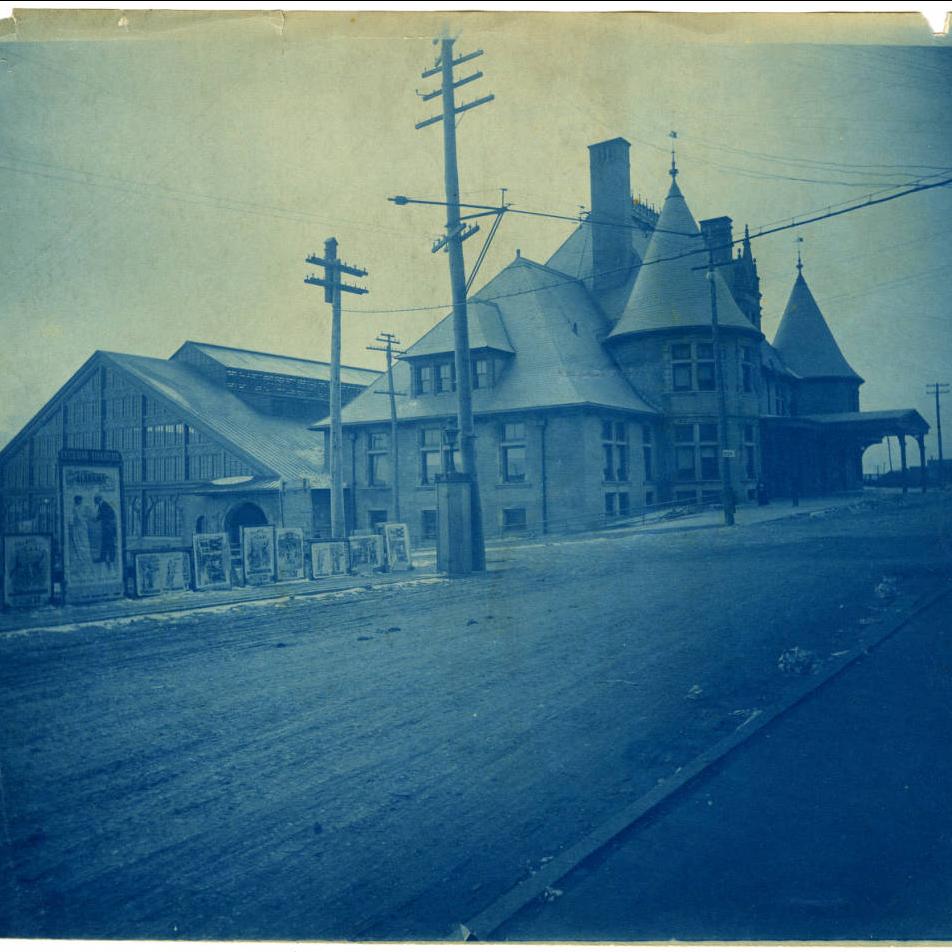
If you are curious about cyanotypes, stereographs, tintypes, cartes de visite, panoramas, Kodachrome, and polaroids, be sure to explore MDL’s History of Photography timeline to learn more!
Image credit: Cabinet card portrait of George E. Keene and Dr. G. A. Dahl, Mankato, c. 1900. Blue Earth County Historical Society, https://collection.mndigital.org/catalog/blue:1689